


Last Updated: October 29, 2026
Quick Summary
A practical beginner kit centers on five or six core farrier tools: hoof nippers, a hoof knife, a rasp, a rounding hammer, a driving hammer, and a pull-off for shoe removal. Start with the tools you touch on every horse, a rasp, a hoof knife, and a hoof pick, then add nippers once your technique is confident. You can build a working trimming kit for well under two hundred dollars and add shoeing tools as your skills grow.
- The Bellota Top Sharp Rasp Hoof Rasp costs $28.15 and is a strong first rasp.
- The AB Economy Straight Blade RH Wood Handle Hoof Knife is an economical pick at $17.25.
- A 10 oz driving hammer is easier to control over a long session than a heavier head.
- Brush the rasp after every hoof and store it flat and dry to keep it cutting.
- Use a hoof stand to raise the foot to roughly knee level and protect your back.
Table of Contents
- Building Your First Beginner Farrier Tool Kit
- What Tools Does a Farrier Use? The Core Essentials
- Farrier Tools for Hoof Trimming: What to Buy First
- Farrier Tool Brands: What Separates Quality From Price
- Budget vs. Investment: What Beginners Should Spend
- Sharpening, Storage, and Maintenance That Protects Your Investment
- Safety Gear and Ergonomics for New Farriers
- Stocking Your Kit With Anvil Brand
- Frequently Asked Questions
Building Your First Beginner Farrier Tool Kit
Walking into farriery with a credit card and a wish list is how many beginners waste money. Build a starter kit around the tools you reach for every day, then add specialty equipment as your skills sharpen.
A farrier tool kit is the collection of hand tools a farrier uses to trim, balance, and shoe a horse's hooves. Maintaining the health of the hoof wall requires these specialized implements, just as the overall upkeep of the animal relies on the proper selection of horse grooming brushes to keep the coat clean and free of debris.
You do not need a truck full of equipment to start, just a handful of well-made tools, a clear understanding of what each does, and the discipline to maintain them.
Quick Picks for Beginners:
- Best rasp to start with: Bellota Top Sharp Rasp Hoof Rasp, $28.15
- Best budget knife: AB Economy Straight Blade RH Wood Handle Hoof Knife, $17.25
- Best everyday pick: Soundmount Stainless Steel Hoof Pick, $24.35
What Tools Does a Farrier Use? The Core Essentials
A farrier uses a defined set of hand tools for trimming and shoeing, and the core group breaks into two jobs: trimming the hoof and working with shoes.
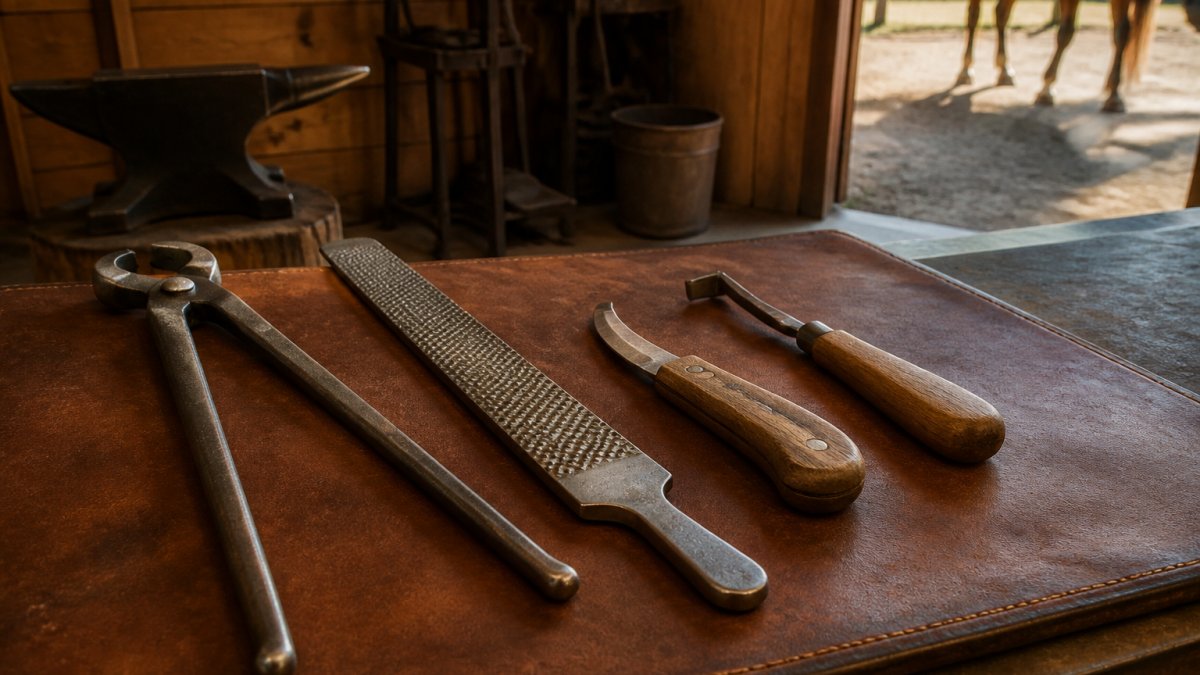
Hoof nippers, a rasp, and a knife laid out on a leather mat in a sunlit barn workshop for farrier maintenance work.
(/products/diamond-pull-off-12-sp12d) is a solid example of the tool's design, with sharp outside teeth for spreading most shoe sizes.
Farrier Tools for Hoof Trimming: What to Buy First
Start with the tools you touch on every horse: a rasp, a hoof knife, and a hoof pick before anything else. Nippers come next, once you are confident in your technique.
- Hoof pick for cleaning debris before you assess the hoof
- Rasp for leveling the hoof wall and finishing
- Hoof knife for sole and frog detail work
- Hoof nippers once you are ready to remove length
- Hoof tester to check for sensitivity
The Bellota Top Sharp Rasp Hoof Rasp is a strong first rasp, with a coarse file side and a cutting rasp side that farriers tend to like for its cutting style. Pair it with the AB Economy Straight Blade RH Wood Handle Hoof Knife, an economical straight-blade knife that suits beginners and barefoot trimmers alike.


Farrier Tool Brands: What Separates Quality From Price
Price alone tells you little about a farrier tool. What matters is the steel, the forging, the handle, and how the tool holds an edge after repeated use.
- Material: forged steel and tool steel hold up better than cast or soft metal
- Construction: riveted joints and solid handles resist loosening
- Handle design: ergonomic handles reduce hand fatigue on long days
A common mistake is chasing the lowest price per tool and replacing it twice a year. The real difference between budget and professional-grade comes down to how many trims it survives before it needs sharpening or replacement.
Budget vs. Investment: What Beginners Should Spend
Beginners should spend on the tools they use every day and go economical on the rest, covering the essentials without overbuying specialty equipment you are not ready to use.
Here is a practical breakdown of a starter kit and where the money goes:
Tool |
Example Product |
Price |
Priority |
|---|---|---|---|
Hoof pick |
Soundmount Stainless Steel Hoof Pick |
$24.35 |
Buy first |
Hoof knife |
AB Economy Straight Blade RH Wood Handle Hoof Knife |
$17.25 |
Buy first |
Rasp |
Bellota Top Sharp Rasp Hoof Rasp |
$28.15 |
Buy first |
Driving hammer |
Diamond 10 Oz Driving Hammer |
$49.15 |
Buy next |
Hoof tester |
AB Round Stainless Steel Hoof Tester |
$68.00 |
Buy next |
Pull-off |
Diamond 12" Pull Off SP12D |
$89.60 |
Buy next |
Nail nipper |
Mustad Nail Nipper |
$94.70 |
As needed |
Clincher |
Anvil Brand Clincher(Made in USA) |
$65.25 |
As needed |
You can build a working trimming kit for well under a hundred dollars, then add shoeing tools as your skills grow. Spending more up front on a clincher you barely use is money tied up in a drawer.
Sharpening, Storage, and Maintenance That Protects Your Investment
Tools that are sharpened and stored correctly last years longer than neglected ones. A dull rasp or knife forces you to push harder, which is inefficient and unsafe. Maintenance is the single skill most beginners skip, which is why so many expensive tools end up in a drawer by the second season.
Sharpening a Hoof Knife
A hoof knife is the tool beginners ruin fastest. The blade is thin, the bevel is shallow, and a few passes at the wrong angle will round the edge instead of restoring it.
- Match the existing bevel. Lay the blade flat on a fine sharpening stone and lift it only until the bevel sits flush, usually a very shallow angle. Do not invent a steeper angle; you will weaken the edge.
- Push, don't saw. Draw the blade across the stone in one direction, edge trailing, then flip and repeat on the other side. Sawing back and forth rounds the tip.
- Finish with a leather strop. A few strokes on a strop remove the burr and leave a polished edge that cuts cleanly through sole.
Cleaning and Reviving a Rasp
Rasp teeth pack with hoof material and rust faster than any other tool in the kit. A packed rasp skates across the hoof instead of cutting, which is when beginners start pushing too hard.
Bellota Top Sharp Rasp Hoof Rasp →
- Brush the teeth after every hoof. A stiff wire brush run along the grain lifts packed material before it hardens.
- Soak a clogged rasp briefly in a rust penetrant or light oil, then brush again. This loosens dried hoof and surface rust without dulling the teeth.
- Store rasps flat and dry. A rasp tossed loose in a bag knocks its own teeth against other steel and dulls itself.
Nippers and Clinchers
Nippers and clinchers do not need home sharpening, send them out or replace the cutting heads when they crush rather than cut. What they do need is a clean pivot: a drop of light oil on the joint after each use keeps the handles moving freely and prevents the rivet from seizing. Wipe the cutting edges dry immediately; hoof moisture plus steel equals rust overnight.
Storage That Actually Protects Edges
Storage is where beginners lose the most money without noticing. A tool chap or roll keeps edges separated and dry, but the details matter:
- Dry before you bag. A damp knife in a closed chap rusts by morning. Wipe and let tools air briefly before rolling them up.
- Keep the rasp in its own pocket. Rasp teeth and knife edges should never share a slot.
- Hang or lay flat, never lean. A tool leaning against a wall in a damp barn is a rust experiment.
For storage, a tool chap keeps everything organized and within reach. The Farrier-Friendly Pro Tool Chap is made of quality leather with tool pockets designed for a user-friendly and safer reach and a standard-size rasp pocket.

Farrier-Friendly Pro Tool Chap Left Side **Colors Will Vary**
Safety Gear and Ergonomics for New Farriers
New farriers underestimate how much strain the work puts on hands, wrists, and back. Good ergonomics and basic safety gear protect you from injuries that build up slowly and are hard to undo, the difference between a hobby that lasts and one that ends with a wrist brace.
Why Repetitive Strain Hits Beginners Hardest
Farriery is a high-repetition, high-grip-force job. A single trim involves hundreds of rasp strokes, repeated nipper squeezes, and long periods bent over a hoof held at knee height.
Most practitioners find the trouble starts with grip. When a tool is dull or the handle is too small, the hand compensates by squeezing harder, and that extra force travels up the forearm into the elbow.
Tool Choices That Reduce Strain
- Handle diameter matters. A handle that fills the hand lets you grip with less force. The Mustad Nail Nipper is designed for comfort and a stable grip, even for farriers with smaller hands.
- Sharp tools are ergonomic tools. A dull rasp or knife forces you to push, and pushing is what strains wrists and shoulders. Keeping edges sharp is injury prevention, not just tool care.
- Longer handles give more leverage. Where a tool offers a long-handle option, it lets you apply force with the arm rather than crushing the handle with the hand.
Posture and Working Height
The single biggest back-saver is bringing the hoof to you instead of bending to the hoof. Use a hoof stand or stall jack to raise the foot to roughly waist level for front hooves, so your back stays closer to neutral.
Beginners tend to work in one position until the job is done. Break the position every few minutes: stand up, roll the shoulders, open and close the hands.
Protective Gear Worth Wearing
- Safety glasses. Hoof chips and nail points fly. This is the one piece of gear with no downside.
- Gloves. They protect against cuts and improve grip on slick tools, though some farriers prefer bare hands for feel. Try both and decide.
- Sturdy boots. A dropped hoof or a nipper off the bench lands on your foot, not the floor.
Warning Signs to Take Seriously
Stocking Your Kit With Anvil Brand
Building a kit is easier when one supplier stocks the core tools and the specialty items you will need later.
If you want to deepen your foundational skills while you assemble your kit, the Farriery Skills and Knowledge Equine Book is a 400+ page hardback textbook written by three Fellows of the Worshipful Company of Farriers, covering anatomy, foot balance, trimming, shoeing, and tool maintenance.
Our tools are trusted by farriers worldwide and used by organizations like the Budweiser Clydesdales. As customer Jim Fornoff puts it, "They've got it all!"
Frequently Asked Questions
What tools does a beginner farrier need to start?
A starter set covers trimming and basic shoe work: hoof nippers, a hoof knife, a rasp, a hoof pick, and a hoof tester. If you plan to shoe, add a driving hammer, pull-offs, a nail clincher, a rounding hammer and nail nippers. Buy the trimming tools first and add shoeing tools as your skills grow. A leather tool chap keeps everything within reach and protects your legs while you work.
How much does a beginner farrier tool set cost?
You can build a functional trimming kit for under $150 by choosing economical options, then add shoeing tools over time. For example, the AB Economy Hoof Knife runs $17.25 and the Bellota Top Sharp Rasp is $28.15. Shoeing tools cost more: the MFC Saddlehorse Nail Clincher is $198.75. Spread purchases across a few months so you buy each tool once and buy it well. Expect to spend $250.00 for a full trimming and shoeing kit.
What is the difference between hoof nippers and hoof knives?
Hoof nippers cut through the hoof wall to shorten excessive growth, using leverage from long handles. Hoof knives have a curved or straight blade for paring the sole and cleaning around the frog, where precision matters more than force. Beginners need both, but a knife is the tool you will use most in barefoot trimming. Keep the blade sharp and cut away from your body.
Which farrier tools should beginners avoid buying cheaply?
Do not cut corners on rasps, nippers, or hoof knives. A dull rasp forces you to push harder, which tires your arms and produces uneven hoof walls. Forged steel tools with ergonomic handles cost more upfront, and a well-made tool is generally the better value over time.
Can horse owners use farrier tools for basic hoof care?
Yes, for routine cleaning and light maintenance between professional visits. A hoof pick and a rasp handle most day-to-day work, and an economical hoof knife is fine for minor touch-ups. Leave balance-critical trimming and all shoeing to a qualified farrier. If your horse has navicular, contracted heels, or other problem hooves, work with your vet and farrier rather than trimming yourself.
Building a first farrier kit is a decision about durability as much as budget. Buy the tools you will use every day, maintain them well, and add specialty equipment as your skills grow. Anvil Brand stocks professional-grade nippers, rasps, knives, hoof testers, and more, with fast shipping from our Lexington, Illinois facility, a 30-day return policy, and expert support to help you choose the right tools for your skill level. Get started with Anvil Brand and build a kit that lasts.
