


Last Updated: October 27, 2026
Quick Summary
There is no single correct horseshoe for navicular; the right choice depends on the veterinarian's diagnosis, the individual hoof conformation, and how the horse responds to the first setup. Start with the vet's written findings, match the shoe family to the hoof shape, and reassess every four to six weeks.
- Egg-bar and open-heel designs extend support behind the hoof to reduce load on painful heels.
- Wedge pads raise the heel angle but risk overcorrection and are not suitable for every navicular horse.
- A rolled or squared toe moves breakover back to reduce strain on the navicular region each stride.
- Introduce a wedge gradually with the smallest angle meeting the vet's target, then reassess within the first shoeing cycle.
- Adjust one variable at a time during reassessment so you know what worked.
Table of Contents
- Why the Correct Horseshoe for Navicular Depends on Diagnosis
- Therapeutic Horseshoes for Navicular: What Each Type Does
- Breakover for Navicular Horses: Rolled Toes and Sole Relief
- Wedge Pads for Navicular Horses: Benefits and Risks
- Hoof Boots for Navicular Support as an Alternative
- A Vet-Farrier Decision Process and Reassessment Schedule
- Stocking Your Navicular Shoeing Kit
- Frequently Asked Questions
Why the Correct Horseshoe for Navicular Depends on Diagnosis
There is no single correct horseshoe for navicular. The right shoe depends on what the veterinarian finds in the diagnosis, how the individual hoof is built, and how the horse responds to the first setup. A shoe that helps one navicular horse can make another worse.
That is the uncomfortable truth most shoeing guides skip. Navicular syndrome describes a cluster of problems around the heel, the navicular bone, and the structures supporting the coffin joint. Two horses with the same label can need opposite approaches. One may benefit from an egg-bar that moves load off the heels. Another may need a wedge to change the angle of the coffin joint. A third may do best with a simple rolled toe and no pad at all.
Below, we break down how to read the vet's findings, match shoe type to hoof conformation, and build a reassessment schedule that tells you whether the setup is actually working.
Reading the Vet's Diagnosis and Radiographs
Start with the veterinarian's report, not the shoe catalog. The diagnosis typically combines a lameness exam, hoof tester response over the heel region, and radiographs that show the position of the navicular bone and the angle of the coffin joint. Ask the vet for the specific findings: the hoof-pastern axis, the palmar angle, and whether the heel is underrun or contracted.
Those measurements drive everything. A broken-back hoof-pastern axis points toward a different shoe than a steep, upright hoof. When the vet gives you a target angle, you can check the actual hoof angle before and after trimming so you are shaping to a number, not a guess.
Matching Shoe Choice to Hoof Conformation
Conformation decides which therapeutic option is even viable. A low-heeled, underrun hoof usually needs heel support and a longer ground surface behind the frog. A contracted heel may need frog pressure and relief. A horse with a thin sole cannot tolerate the same setup as one with deep, solid sole depth.
A common mistake is copying the shoe from a previous navicular case. The shoe that worked on a 1,100-pound quarter horse with upright conformation may be wrong for a lighter horse with flat, underrun heels. Match the design to the hoof in front of you.
Therapeutic Horseshoes for Navicular: What Each Type Does
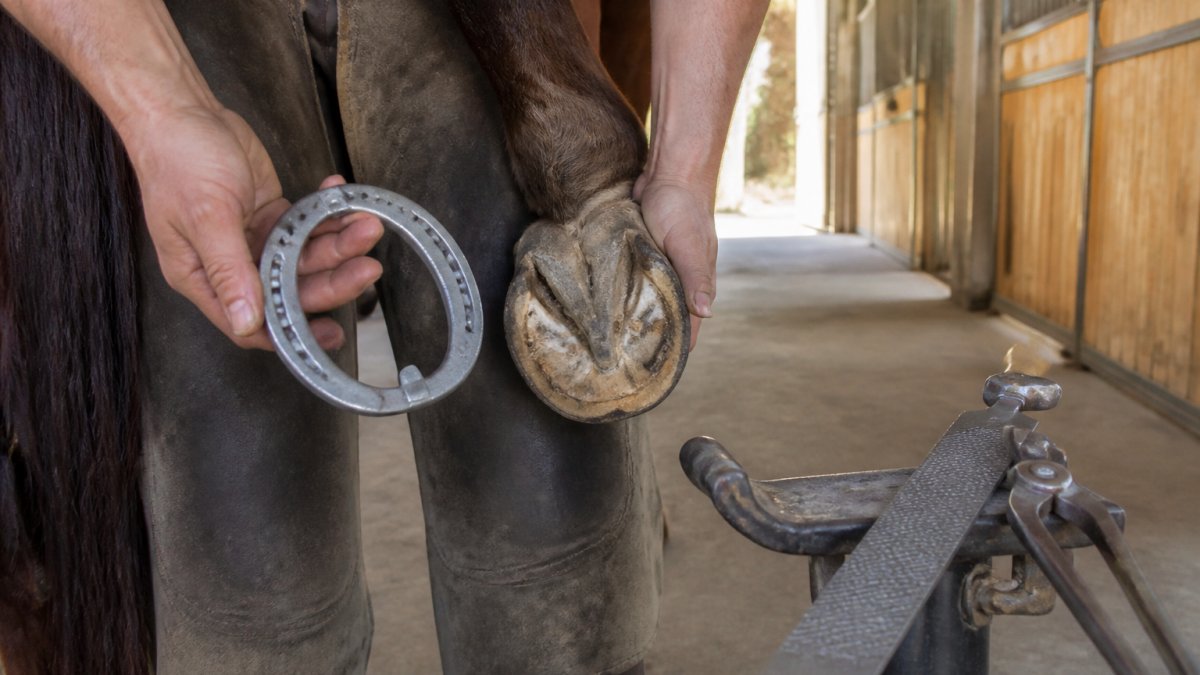
Therapeutic horseshoes for navicular fall into a few working families, and each solves a different mechanical problem. Egg-bar and open-heel designs extend support behind the hoof to reduce load on the heels. Wedge pads and elevated heels change the angle of the coffin joint. Rolled toes ease breakover. Understanding what each type actually does lets you pick the right tool instead of the trendiest one.
Egg-Bar and Open-Heel Designs for Heel Support
Egg-bar shoes extend the shoe behind the heel, which widens the base of support and shifts load away from the painful heel region (pubmed.ncbi.nlm.nih.gov). Open-heel versions leave the heel area open while still providing rear support. For horses with navicular pain centered on the heel, this family is often the first choice.
We carry designs built specifically for this job. The KB Aluminum Navicular #0 horseshoe uses an enhanced egg-bar shape and a rolled toe to reduce stress on the coffin joint, sold by the pair. The Victory Open Heel #0 is engineered to increase phalangeal angulation and decrease navicular pressure, with a solid raised heel and extra nail holes for a secure fit.
A Practical Comparison of Shoe Types
Use this table as a starting point, then confirm the choice against the vet's findings and the individual hoof.
Shoe type |
Primary effect |
Best for |
Watch out for |
|---|---|---|---|
Egg-bar |
Extends support behind heel |
Heel pain, underrun heels |
Can trap debris; check daily |
Open-heel navicular shoe |
Relieves heel pressure, supports rear |
Navicular pain with sensitive heels |
Less rear flotation than full egg-bar |
Wedge pad |
Raises heel angle |
Negative palmar angle, tendon issues |
Over-lifting strains the coffin joint |
Rolled toe |
Eases breakover |
Most navicular setups |
Wrong roll radius changes gait |
Hoof boot |
Removable protection |
Rehab, barefoot transition |
Fit and retention vary by hoof |
The Anvil Brand 0 Eggbar is a straightforward option for navicular syndrome or sheared heels, with a longer shape that prevents undue impact on the rear of the hoof. For frog support and a bar-wedge design, the Castle Pads 2 Bar Wedge Frog is worth a look when the case calls for caudal support.
Breakover for Navicular Horses: Rolled Toes and Sole Relief
Breakover for navicular horses is the point in the stride where the heel lifts and the toe pivots off the ground. Moving that point back, closer to the coffin joint, reduces the strain on the navicular region during every step. A rolled or squared toe is the most common way to achieve it.
The effect compounds over thousands of strides a day, which is why breakover matters as much as heel support. A shoe with a well-placed roll lets the horse break over with less effort and often shows a smoother gait within the first ride. Get the roll radius wrong, though, and you can shorten the stride or push load onto the wrong part of the hoof. Set breakover to the vet's target, not to a fixed measurement copied from another horse.
Wedge Pads for Navicular Horses: Benefits and Risks
Wedge pads for navicular horses raise the heel to change the angle of the coffin joint, which can relieve pressure on the navicular bone and help correct a negative palmar angle. They are one of the most effective tools in the kit when the diagnosis supports them, and one of the most overused when it does not.
KB Aluminum Navicular #0 Horseshoe →
The benefit is angle correction. The risk is overcorrection. The Plexus pads offer a measured 3-degree wedge with a frog plate and heel-check relief, designed to fit both fronts and hinds so you carry less inventory.
Wedges are not appropriate for every navicular horse. A common pattern is that a horse with an already steep, upright hoof-pastern axis or a broken-forward axis may worsen with additional heel elevation. Horses with thin soles or poor hoof wall may not tolerate the added leverage of a wedge pad.
When a wedge is indicated, introduce it gradually. Start with the smallest angle that meets the vet's target, and reassess within the first shoeing cycle rather than waiting four to six weeks. Watch for signs of overload in the opposite direction: increased lameness, a shorter stride, heat in the heel bulbs, or a horse that stands with the toe pointed.
Watch out: never stack wedges to chase an angle without rechecking the hoof-pastern axis. A little lift goes a long way, and the vet's target angle is the ceiling.
Hoof Boots for Navicular Support as an Alternative
Hoof boots for navicular support give you a removable option when the horse needs protection but not a nailed-on shoe. Boots suit rehab periods, barefoot transitions, and horses whose feet cannot hold nails reliably. They also let you change the setup between trim cycles without calling the farrier.
The trade-off is fit and retention. A boot that rubs or twists defeats the purpose, and boots demand daily checking for debris and wear. For some navicular cases, a boot with a pad insert provides the same heel support and breakover relief as a shoe while letting the hoof breathe. For others, the workload is simply too high and a nailed therapeutic shoe holds up better.
A Vet-Farrier Decision Process and Reassessment Schedule
A repeatable process beats a one-time guess. Here is the sequence we recommend:
- Get the vet's written findings, including hoof-pastern axis and palmar angle.
- Measure the hoof angle and conformation before trimming.
- Select the shoe family that matches the diagnosis and hoof shape.
- Set breakover and heel support to the vet's target.
- Photograph and record the setup for comparison.
- Reassess at the next shoeing interval, typically four to six weeks, or sooner if the horse changes.
- Adjust one variable at a time so you know what worked.
Stocking Your Navicular Shoeing Kit
A navicular case can land on your books any week, and the last thing you want is to be short on the right shoe. Keep a working stock of egg-bar and open-heel navicular shoes in the sizes you see most, a range of wedge pads, and the tools to measure and shape accurately. Anvil Brand has a full line of aluminum horseshoes and a variety of other remedial horseshoes, with fast shipping from our Lexington, Illinois facility and 30-day returns.
Frequently Asked Questions
What type of horseshoe is best for a horse with navicular?
There is no single best shoe. The correct horseshoe for navicular depends on the diagnosis, the individual hoof conformation, and how the horse responds. The catalog includes egg-bar and open-heel horseshoes, including options with rolled toes. Some horses need a wedge pad to correct a negative palmar angle; others do better with less elevation. Your vet's radiographs and the farrier's reading of the hoof should drive the choice, and the shoe should be reassessed at each reset.
Are aluminum horseshoes a good option for navicular horses?
The catalog includes aluminum horseshoes for navicular. The KB Aluminum Navicular #0 is listed with an enhanced eggbar design and rolled toe, and the Victory Open Heel #0 is listed with a rolled toe, solid raised heel, and wide web. And Anvil Brand has a complete series of heart bar, straight bar, egg bar and wedge aluminum horseshoes.
Do wedge pads help horses with navicular?
The Plexus Open Toe 3° medium pads are listed with a 3-degree wedge to help correct negative palmar angles and tendon issues, and a large frog plate with heel-check relief.
How does breakover affect a horse with navicular pain?
The KB Aluminum Navicular #0 is listed with a unique breakover system designed to reduce stress on the coffin joint. The Victory Open Heel #0 is listed with a rolled toe for easier breakover. Most Anvil Brand Aluminum horseshoes have some breakover in the toe.
Are hoof boots an alternative to horseshoes for navicular support?
Hoof boots for navicular support can work well for horses in light work, horses on turnout, or horses that need a break from nailed-on shoes. A boot with a padded sole and heel support cushions the hoof and can be swapped out as the hoof changes. The limits are fit and workload: boots can rub, they trap moisture if left on too long, and they are not ideal for high-speed or heavy work. Many owners use boots as part of a barefoot approach between shoeing cycles rather than as a permanent replacement.
How often should a navicular horse be reshod?
The appropriate reshoeing interval depends on the individual horse and should be discussed with the horse's veterinarian and farrier.
Should a veterinarian or farrier choose shoes for a navicular horse?
The veterinarian and farrier can discuss the horse's diagnosis and shoeing needs together. The catalog includes horseshoes and pads listed for navicular-related needs.
Navicular shoeing rewards preparation and punishes guesswork. Build your kit around the diagnoses you actually see, measure every hoof before you shape a shoe, and reassess on a schedule instead of waiting for the horse to go lame again. Anvil Brand carries the therapeutic horseshoes, pads, and farrier tools that keep those cases moving, backed by expert support when you need a second opinion on a tricky hoof. Get started with Anvil Brand and keep your navicular cases properly shod.
